#000561
Artistic Anatomy
Paul Richer; translated and edited by Robert Beverly Hale
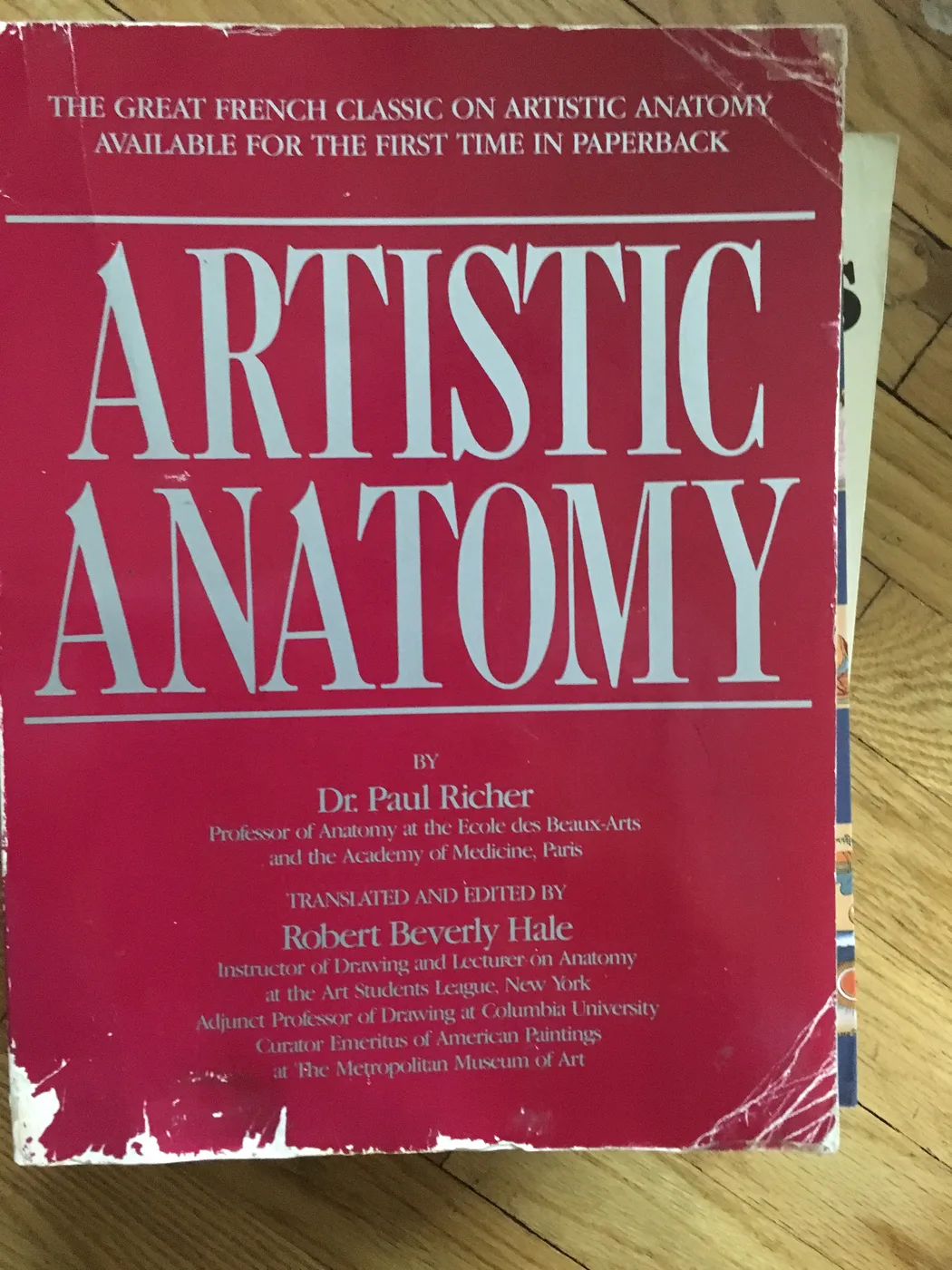
Widely regarded as the greatest treatise on artistic anatomy since the Renaissance, brought into English by the twentieth century's most celebrated teacher of figure drawing. Dr. Paul Richer — physician, professor of anatomy at Paris's École des Beaux-Arts, and a serious artist himself — first published this exhaustive study of the human body for artists in 1889. Robert Beverly Hale, who taught anatomy at the Art Students League for four decades, translated and edited it for modern readers. The book systematically maps bones, muscles, proportions, and the mechanics of the body in motion, illustrated with Richer's own precise drawings and diagrams. It is a working reference for the serious student of the figure — demanding, thorough, and unrivaled in its rigor. Generations of artists have kept it at the drawing table, and it remains a cornerstone of academic art training.
more…less ▴
The author and translator
Paul Richer (1849–1933) was a French physician, sculptor, and professor of artistic anatomy at the École des Beaux-Arts, and a member of the Academy of Medicine — a rare figure fully at home in both science and art. Robert Beverly Hale (1901–1985) taught anatomy and figure drawing at the Art Students League of New York for forty years and served as curator of American art at the Metropolitan Museum; his lectures shaped modern academic drawing instruction.
The book
Artistic Anatomy first appeared in French in 1889, reportedly consulted by artists such as Degas and Renoir. Hale's English translation and edition (Watson-Guptill) made this classic available to English-speaking students, running to roughly 255 illustrated pages of bones, muscles, proportion, and the body in movement.
How it has aged
Anatomy does not change, and neither does the book's value. It remains a benchmark reference in ateliers and academic programs, admired for the clarity of Richer's plates and the authority of Hale's editing. Its approach is traditional and rigorous rather than quick or casual; it rewards patient study and pairs naturally with life drawing.
For more context
Read alongside Hale's own Drawing Lessons from the Great Masters and George Bridgman's anatomy books.
Sources
- Type
- Book
- Author / Maker
- Paul Richer; translated and edited by Robert Beverly Hale
- Publisher
- Watson-Guptill
- Place of publication
- New York
- ISBN
- None
- Shelf
- Art
- Location
- Colorado