#000558
Dreamworld Tibet: Western Illusions
Martin Brauen
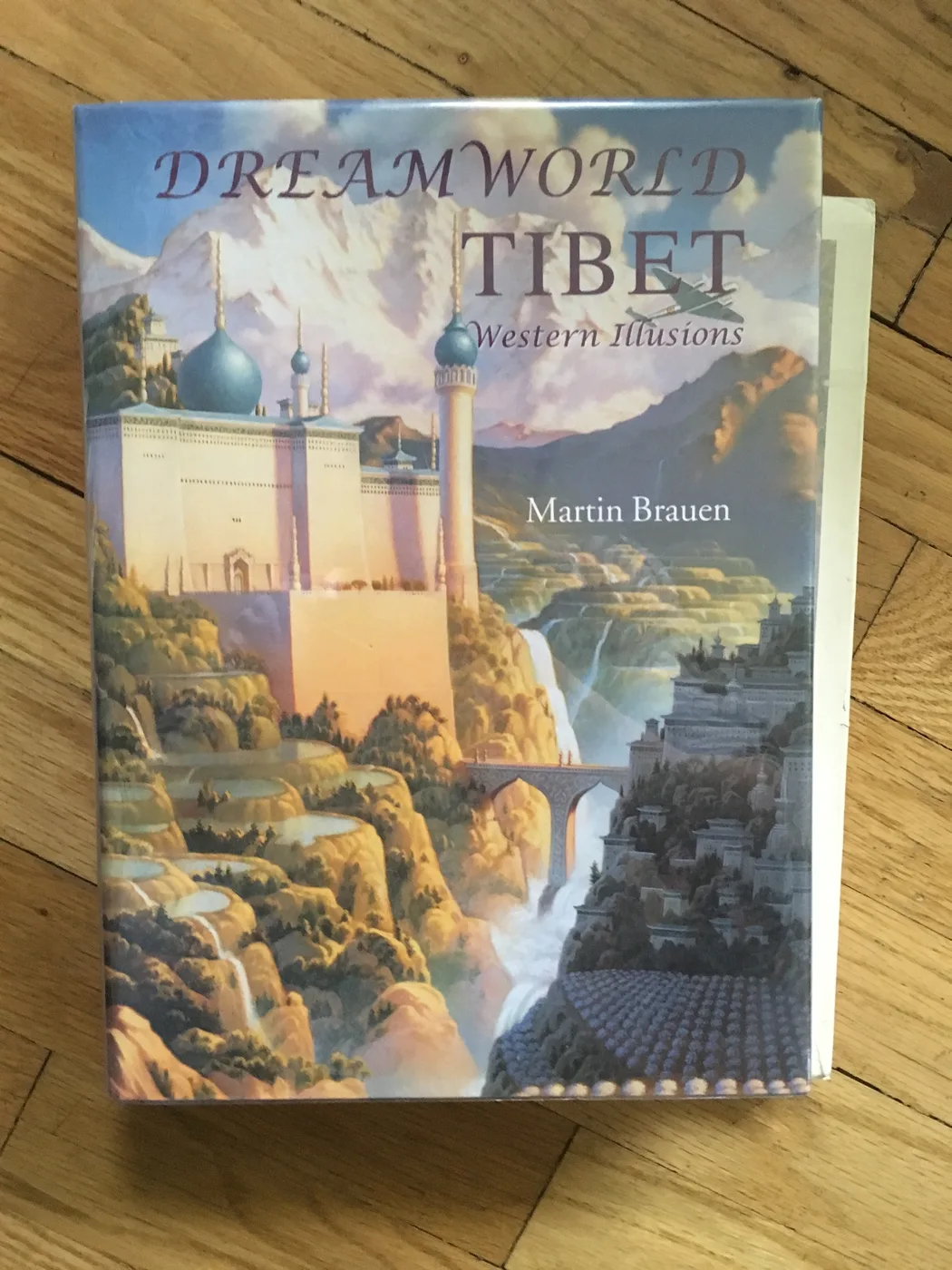
A sharp, richly illustrated study of how the West has imagined Tibet — and how little those fantasies have had to do with the place itself. Swiss anthropologist Martin Brauen traces a long parade of projections: the lost paradise of Shangri-La, the land of secret wisdom, the occult obsessions of the Nazis, Hollywood's romantic distortions, and the modern marketing that slaps Tibetan monks and mandalas onto everything from cars to cosmetics. Drawing on movies, comics, advertising, and popular literature, Brauen assembles a startling visual record of misinterpretation, trivialization, and commercial exploitation of a living culture. The tone is lively rather than scolding, but the argument is serious: our dreams of Tibet reveal more about Western longings than about Tibetans. For anyone drawn to Himalayan Buddhism or wary of exoticism, it is a bracing, self-aware corrective.
more…less ▴
The author
Martin Brauen is a Swiss anthropologist and museum curator who long headed the Tibet, Himalaya, and Far East department at the Ethnographic Museum of the University of Zurich, and later worked at the Rubin Museum of Art in New York. He writes as a specialist in Tibetan culture turning a critical eye on his own society's fantasies about it.
The book
Dreamworld Tibet: Western Illusions was first published in German in 2000 and appeared in English (translated by Martin Willson) in the early 2000s. It is part cultural history, part visual essay, cataloguing Western images of Tibet from eighteenth-century travelers through Theosophy, Nazi occultism, Lost Horizon, and contemporary advertising and pop culture.
How it reads
The book has aged well and, if anything, grown more relevant as "Tibetan" branding proliferates. Its central insight — that Western Tibetophilia is a mirror for Western needs — sits comfortably alongside broader critiques of Orientalism. Readers should note it is a study of representations, not a history of Tibet itself, and it deliberately keeps the real, contested political situation in the background; for that, other books are needed. As a mirror held up to our own projections, it is illuminating and often uncomfortable.
For more context
Pair with Donald Lopez's Prisoners of Shangri-La and with Edward Said's Orientalism.
Sources
- Type
- Book
- Author / Maker
- Martin Brauen
- Publisher
- Shambhala Publications
- Place of publication
- Boston
- Year
- 2004
- ISBN
- None
- Shelf
- History
- Location
- Colorado