#000441
Robots: Fact, Fiction, and Prediction
Jasia Reichardt
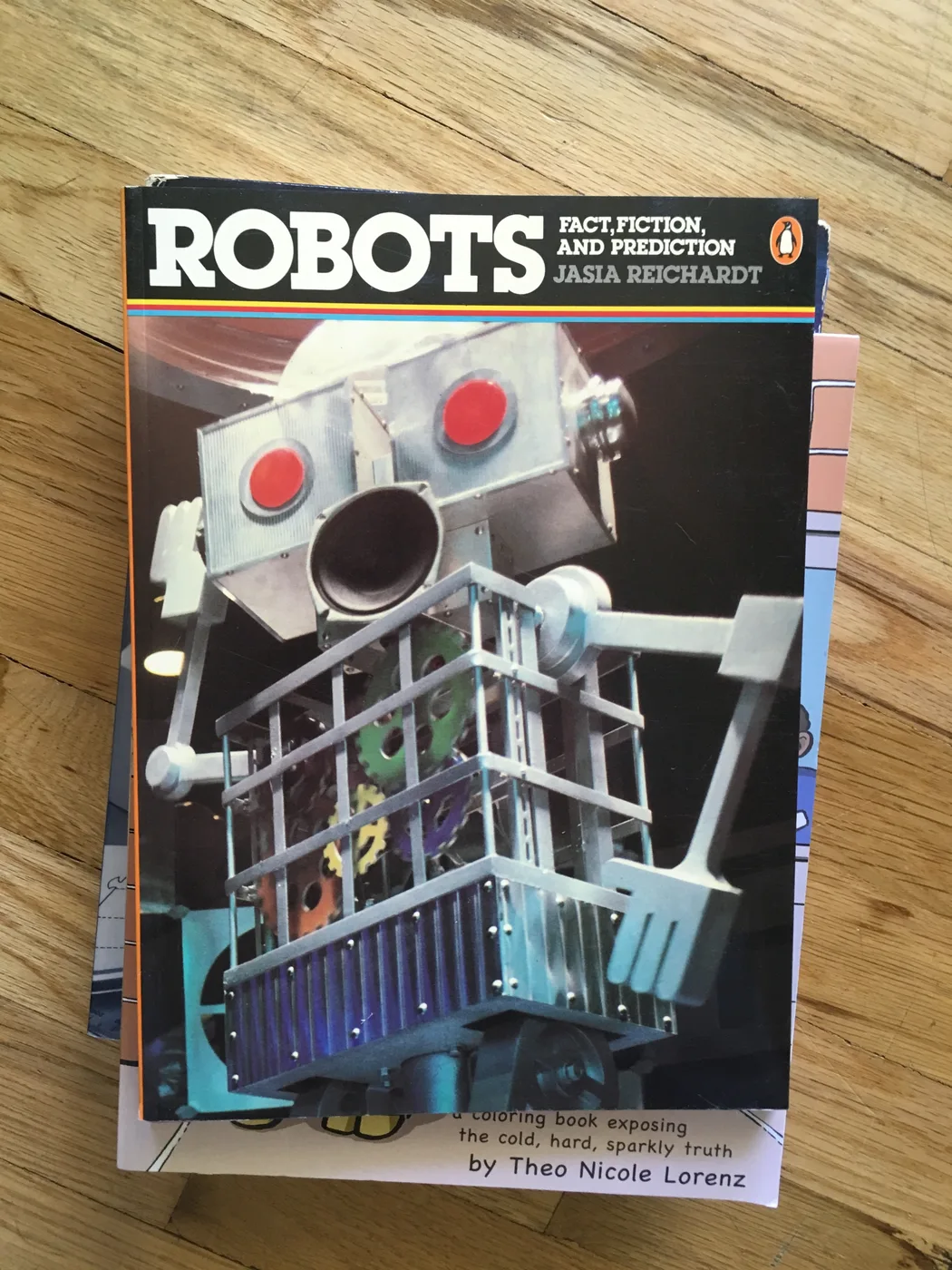
Jasia Reichardt's *Robots: Fact, Fiction, and Prediction* is a wonderfully wide-angled look at the robot as both machine and idea, written by a curator with an eye for where technology and imagination meet. Published in 1978, in the oversized, richly illustrated format of its day, it ranges from mechanical servants and factory arms to toy robots, science-fiction dreams, and the early ambitions of artificial intelligence, treating each with equal curiosity. Reichardt—who had earlier organized the pioneering *Cybernetic Serendipity* exhibition—is less interested in engineering specs than in the cultural life of robots: what we hope and fear they might become. Read now, it is a fascinating time capsule, its predictions by turns prescient and quaint. For anyone drawn to the history of AI, retro-futurism, or the long human habit of dreaming up artificial people, it is an engaging and surprisingly thoughtful survey.
more…less ▴
The author
Jasia Reichardt (b. 1933) is an art critic, curator, editor, and gallery director known for exploring the borderland between art and technology. Her landmark 1968 exhibition Cybernetic Serendipity at London's ICA was among the first to take computers and machines seriously as sources of art, and Robots extends that sensibility to the mechanical humanoid.
The book
Published in 1978 by Thames & Hudson (and Penguin), it is a large-format, heavily illustrated survey of robots across fact and fancy: mechanical servants, industrial workers, teaching machines, toys, science-fiction inventions, and the then-young field of artificial intelligence. Reichardt's approach is cultural rather than technical—she is fascinated by what robots mean to us as much as how they work.
How it has aged
Its charm is precisely that it dates from the dawn of the personal-computer era, before the AI revolutions to come; some predictions look shrewd, others endearingly off. As a snapshot of how the late 1970s imagined its mechanical future, and as a still-thoughtful meditation on artificial people, it holds up remarkably well.
For more context
It pairs with histories of automata and with later accounts of AI's development from the 1980s onward.
Sources - Internet Archive - Goodreads
- Type
- Book
- Author / Maker
- Jasia Reichardt
- Publisher
- Thames & Hudson / Penguin Books
- Place of publication
- London
- Year
- 1978
- ISBN
- None
- Shelf
- Science
- Location
- Colorado